Casey Wolf · 6 October 2026
Tracing the Development of Hybrid Analytics Methods Among Independent Publishers Adapting to Successive Infrastructure Updates
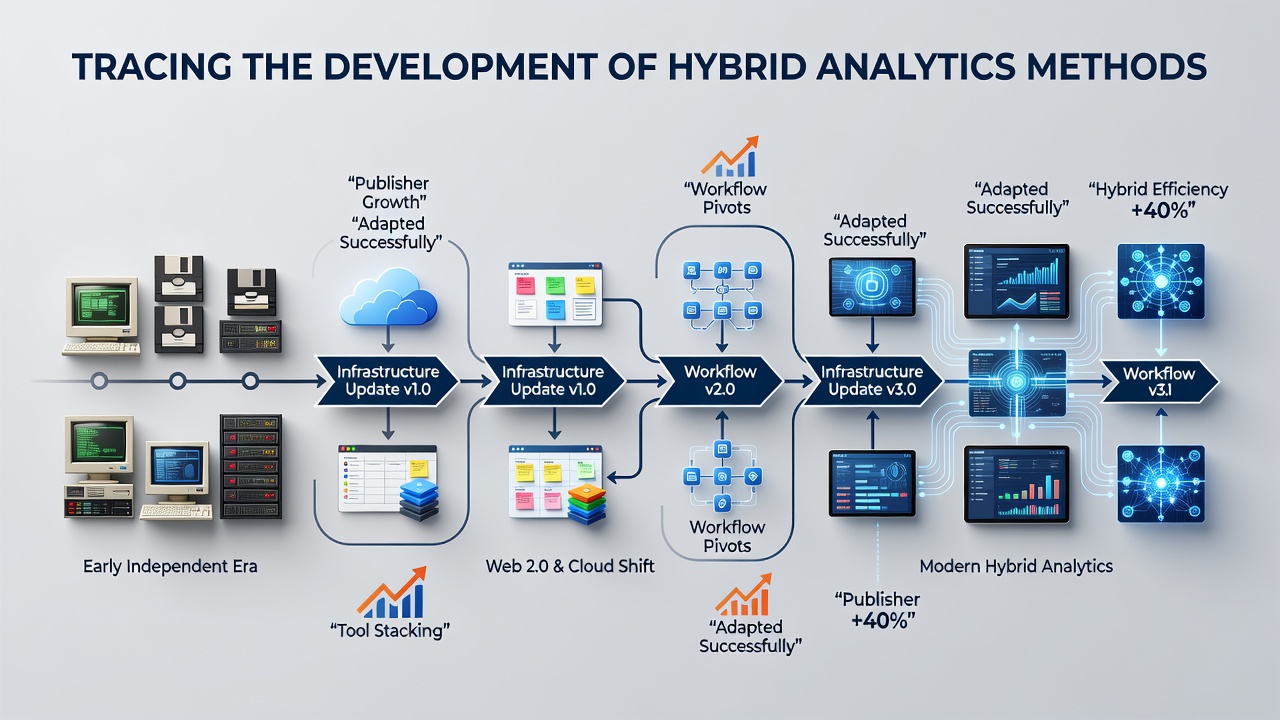
Independent publishers have shifted toward hybrid analytics methods as successive infrastructure updates reshaped data collection and processing workflows over the past decade, and these adaptations continue to evolve through 2026. Early reliance on single-platform tools gave way to layered systems that combine first-party data streams with selective external processors, allowing sites to maintain measurement accuracy while complying with changing platform policies and privacy standards. Data from multiple regions shows publishers integrating server-side tracking alongside client-side scripts to reduce signal loss during hosting migrations and content management system upgrades.
Observers note that infrastructure changes often arrive in clusters, with updates to content delivery networks, database architectures, and ad-serving frameworks occurring within short timeframes. Publishers responded by building modular analytics stacks that pull metrics from internal logs, third-party verification services, and emerging privacy-preserving APIs. Research indicates these hybrid approaches gained traction after major browser vendors phased out third-party cookies, prompting independent operators to develop custom event pipelines that merge on-site behavior data with aggregated audience insights from regulatory-compliant sources.
Initial Infrastructure Shifts and Early Hybrid Experiments
Publishers began experimenting with hybrid methods around 2018 when successive hosting platform transitions forced many sites to rebuild their data foundations. Those who managed multiple relocations found that traditional single-source analytics failed to capture complete user journeys across new domains and CDN configurations. Studies from academic institutions documented how teams started combining Google Analytics alternatives with internal database queries, creating parallel data flows that preserved historical benchmarks while incorporating new measurement points.
One documented case involved a network of niche news sites that adopted server-side tagging after a major CMS overhaul disrupted client-side scripts. The approach merged real-time event logging with batch processing of archived logs, and it produced more stable reporting during subsequent infrastructure refreshes. Figures from industry reports reveal that similar patterns appeared across North American and European independent outlets facing comparable platform constraints.
Expansion Through Successive Platform Transitions
By 2022, repeated service relocations had accelerated the refinement of hybrid techniques. Publishers incorporated API connectors that linked internal content databases to external measurement platforms while maintaining data residency requirements. This period saw increased use of edge computing resources to process analytics closer to content delivery points, reducing latency and improving data granularity during peak traffic events.
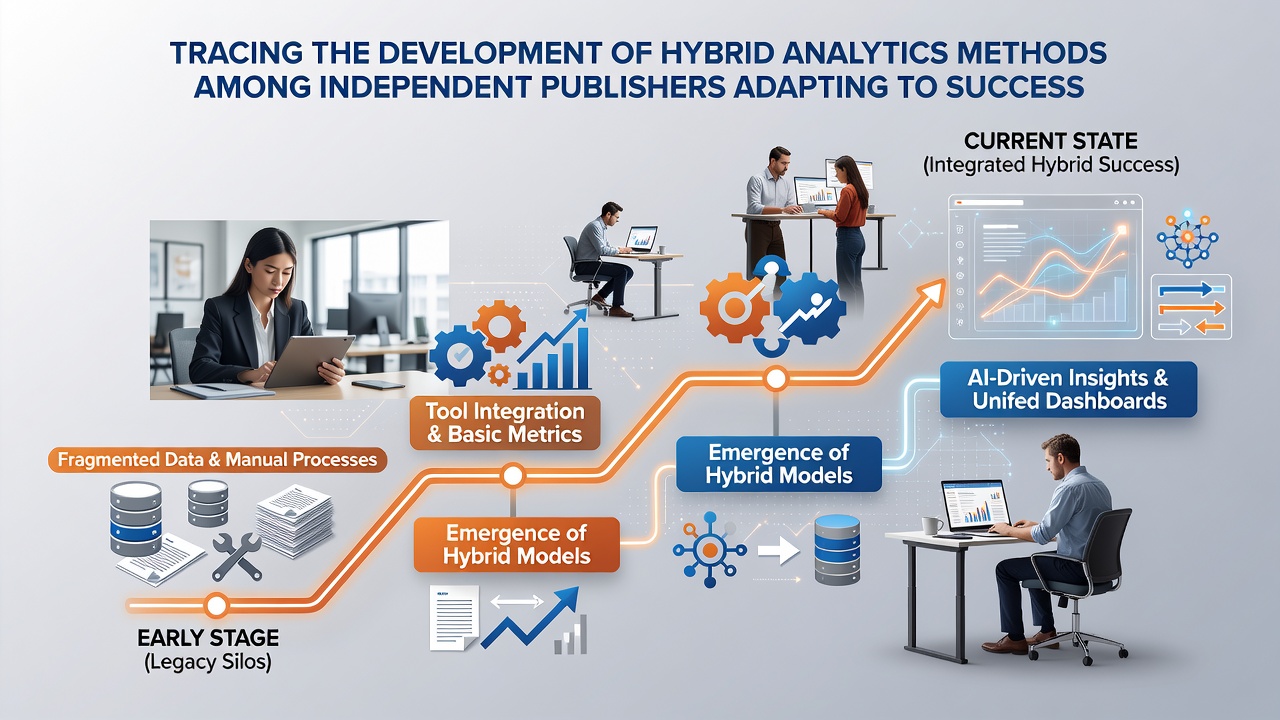
What's interesting is how these methods matured through iterative testing rather than wholesale replacement of existing tools. Teams retained legacy tracking identifiers where permitted and layered new consent-managed identifiers on top, creating overlapping datasets that allowed cross-validation. Evidence from research papers shows error rates in audience measurement dropped when publishers applied statistical reconciliation between first-party and consented third-party sources during infrastructure updates.
Current Practices Observed in October 2026
As of October 2026, hybrid analytics frameworks among independent publishers include automated reconciliation engines that flag discrepancies between data sources after each infrastructure change. These systems draw on machine learning models trained on historical migration data to predict and correct for measurement gaps. Publishers in Australia and Canada have shared implementation details through industry forums, highlighting the use of open-source libraries alongside commercial verification services to balance cost and accuracy.
According to a Reuters Institute report on digital publishing trends, many outlets now maintain separate data lakes for raw logs and processed metrics, enabling rapid reconfiguration when new platform requirements emerge. The approach supports both internal performance tracking and external reporting obligations under evolving data protection frameworks. One study revealed that sites adopting these layered methods sustained higher continuity in traffic analysis compared with those relying on single-vendor solutions during recent hosting transitions.
Additional external sources include documentation from the Reuters Institute for the Study of Journalism on measurement adaptations and findings from the Pew Research Center on independent media infrastructure challenges. Both organizations track how publishers across different regions refine data practices in response to platform evolution.
Conclusion
Hybrid analytics methods have developed through repeated cycles of infrastructure adaptation, with independent publishers refining techniques that integrate multiple data sources while preserving measurement reliability. The patterns observed through October 2026 demonstrate consistent emphasis on modular systems capable of absorbing future platform changes without complete rebuilds. Continued documentation of these practices provides a record of how the sector maintains analytical capacity amid ongoing technical and regulatory shifts.