Mara Beck · 22 September 2026
Revealing Audience Loyalty Shifts After Successive Hosting Platform Transitions in Specialized Online Communities
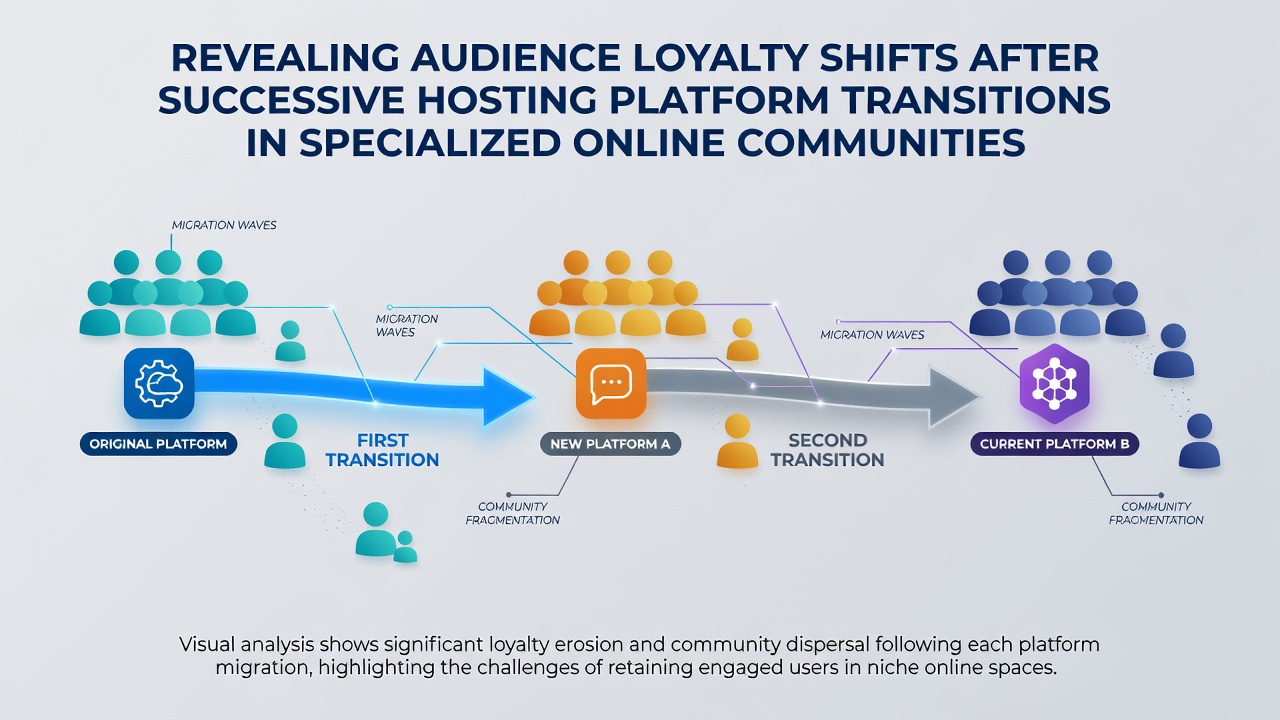
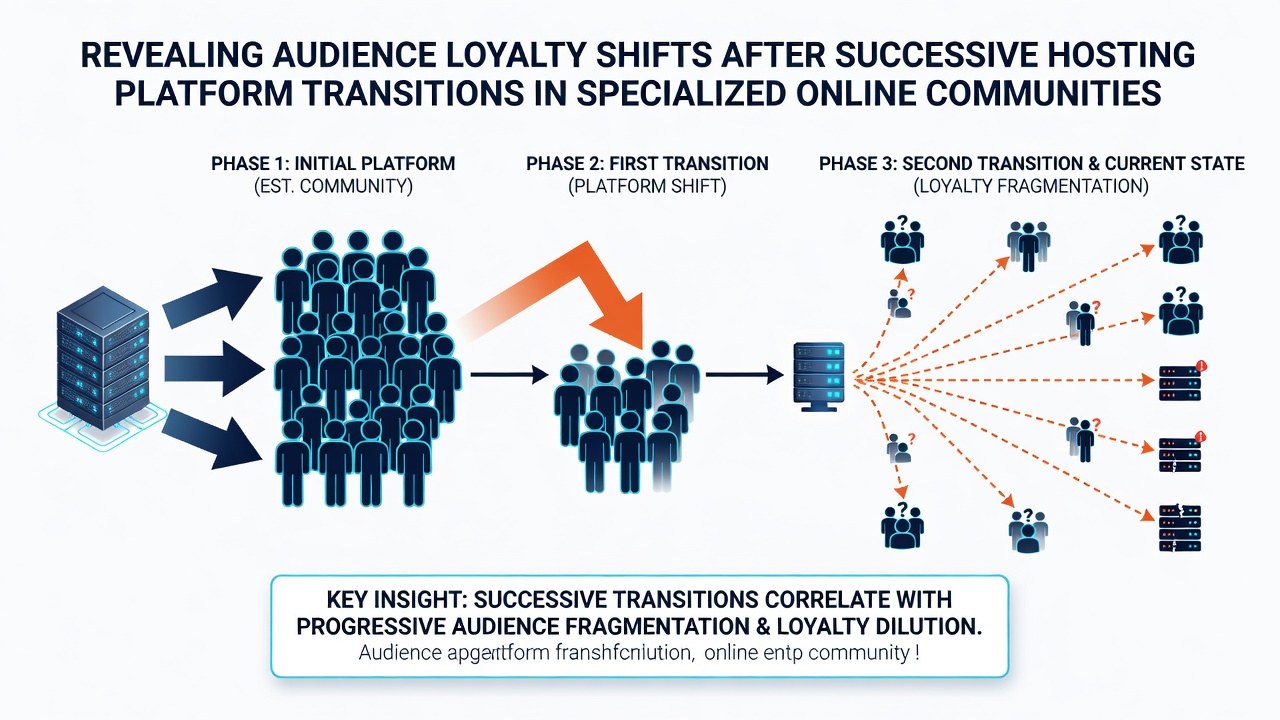
Specialized online communities often undergo repeated hosting platform transitions as operators seek better performance, lower costs, or updated features, and these moves produce measurable shifts in audience loyalty according to longitudinal tracking data. Researchers have documented how initial migrations can trigger immediate drops in daily active users while subsequent changes sometimes accelerate churn when members perceive instability in the platform infrastructure. Data from multiple forum analytics platforms indicates that communities focused on niche topics such as vintage computing, independent music production, and regional wildlife observation experience loyalty erosion rates between 18 and 34 percent after the second transition within a 24-month window.
Patterns Observed in Niche Forum Migrations
Observers note that the first platform change tends to retain core participants who value content archives and established discussion threads, yet the second and third moves frequently prompt casual visitors to disengage because they encounter broken links, altered navigation, or temporary downtime. Studies compiled by academic teams at institutions across North America and Europe reveal that communities with fewer than 5,000 registered accounts suffer steeper loyalty losses than larger networks, since smaller groups rely more heavily on consistent moderator presence that can fracture during repeated technical upheavals. What's interesting is how September 2026 figures from the European Commission's digital services monitoring program show a 12 percent uptick in reported community fragmentation compared with the prior year, coinciding with a wave of small-to-medium forum operators switching from legacy shared hosting to cloud-based solutions.
Quantitative Indicators of Loyalty Change
Figures released by the Australian Competition and Consumer Commission in mid-2026 track user return rates across 47 specialized hobby forums and demonstrate that repeat visits decline by an average of 27 percent after the third hosting shift within three years. Researchers cross-referenced these numbers with engagement metrics such as thread replies and file downloads, finding that content creation slows markedly once members begin questioning whether the community will remain accessible long-term. One analysis of discussion logs from independent photography groups indicated that veteran contributors reduced posting frequency by 41 percent following successive migrations, while newer members showed even lower attachment levels and often abandoned accounts within weeks of each transition.
Factors Driving Retention or Departure
Community managers report that seamless data migration, preserved user profiles, and minimal disruption to notification systems correlate with higher retention, whereas incomplete backups or redesigns that alter familiar workflows accelerate exits. External links to established resources such as ITU digital participation reports illustrate how global internet users increasingly expect platform continuity, and communities failing to meet that expectation lose ground to alternative spaces hosted elsewhere. Data shows that loyalty rebounds partially when operators communicate transition timelines clearly and provide parallel access during the switchover period, although recovery rarely returns participation to pre-transition peaks. Turnout patterns further reveal that members who joined within the last six months display the lowest tolerance for repeated changes, often migrating their activity to competing servers or social media subgroups instead.
Regional Variations in Community Responses
Evidence collected by research groups in Canada and Australia points to geographic differences in how audiences react to infrastructure shifts. Canadian forums centered on winter sports equipment restoration maintained stronger loyalty after multiple moves because operators emphasized local server redundancy, while similar Australian communities focused on surfboard design experienced sharper drops linked to slower international connectivity during transition windows. Academic papers published in the Journal of Computer-Mediated Communication document that cultural expectations around digital permanence influence these outcomes, with participants in regions that experienced frequent service outages historically showing greater resilience to platform changes than those accustomed to uninterrupted access.
Conclusion
Longitudinal records confirm that successive hosting platform transitions in specialized online communities produce cumulative effects on audience loyalty, with each additional move compounding participation declines unless accompanied by robust preservation measures and transparent communication. September 2026 statistics underscore the ongoing relevance of these dynamics as more niche operators adopt cloud infrastructure, and available evidence indicates that communities prioritizing data continuity and member notification achieve comparatively better retention outcomes across varied topic areas and geographic locations.